
Yesterday, while my wife and I were discussing, she mentioned that a colleague at her workplace had asked her an interesting question: “How did Muslims used to find the direction of Makkah before technology?” This sparked a conversation between us, and I started thinking about the remarkable journey of how Muslims have, over time, determined the Qibla for their prayers. From the earliest days of Islam to our modern era, this process has evolved, but the spiritual significance of facing Makkah remains unchanged.
Let’s explore how Muslims have found the Qibla, starting from the beginning of Islam to today’s advanced technology.
Early Days of Islam: Nature as a Guide
In the 7th century, when Islam emerged, the Arabian deserts and skies provided vital clues for determining direction. Muslims relied on their understanding of nature to help them face the Qibla in Makkah.
- The Stars as Guides: Without modern tools, Muslims often turned to the stars for navigation. The North Star, Polaris, was an essential guide in determining north. By identifying Polaris, travelers could align themselves with the cardinal directions, helping them face Makkah. This was especially helpful during night travel in the desert.
- Sun and Shadows: During the day, Muslims relied on the position of the sun to determine direction. They observed how the sun rose in the east and set in the west, which gave them a rough sense of direction. Using shadows cast by objects at different times of the day, they could estimate the direction of Makkah with reasonable accuracy.
- Wind Patterns: In certain regions, particularly the Arabian Peninsula, wind patterns were relatively predictable. By learning these patterns, Muslims could use them as clues for direction when traveling through barren landscapes where other indicators were absent.
- Landmarks and Geography: Muslims living in towns and cities had the advantage of man-made landmarks, such as mosques, which were built facing the Qibla. These mosques provided a constant reference for those living nearby. Similarly, natural landmarks like mountains and rivers were also used as guides in more rural or distant regions.
The Islamic Golden Age: Advances in Science
As Islam spread, the need for more precise methods of finding the Qibla became apparent, especially for Muslims living farther from Makkah. During the Islamic Golden Age (8th to 14th centuries), scientific and astronomical advances made direction-finding more accurate.
- The Astrolabe: The astrolabe was an essential tool developed during this period. Originally used for measuring the altitude of celestial bodies, Muslims adapted the astrolabe for determining the Qibla. By aligning the instrument with the stars, they could accurately find the direction to Makkah, marking a significant leap in navigation.

- Islamic Scholars and Geography: Scholars such as Al-Biruni and Al-Idrisi contributed greatly to geographic knowledge during this era. They studied the shape of the Earth and mapped out the direction to Makkah from various regions. These scholars produced detailed maps, helping Muslims determine the Qibla from any point on the globe.
The Arrival of the Compass: A Game Changer
In the medieval period, the magnetic compass arrived in the Muslim world from China. The compass revolutionized navigation, including how Muslims found the Qibla.
- Qibla Compass: Specialized compasses were created to help Muslims find Makkah from anywhere in the world. These Qibla compasses were small, portable, and simple to use, making them an essential tool for travelers and sailors. They allowed for greater accuracy and convenience compared to older methods.
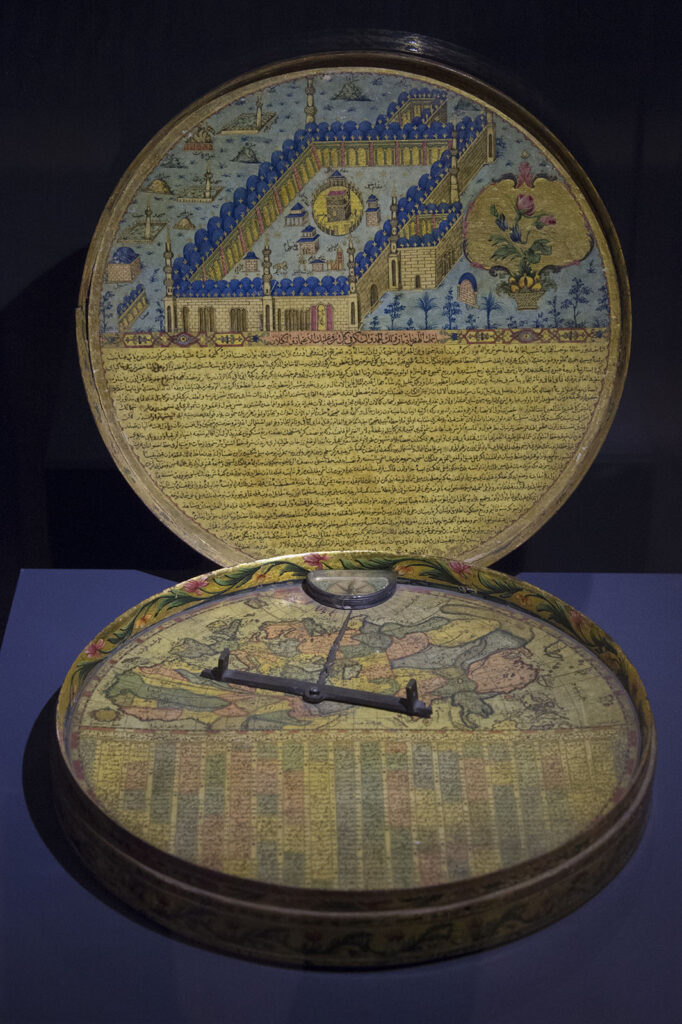
- Printed Prayer Mats: As the printing press became more widespread, prayer mats with built-in Qibla guides became popular. These mats included printed diagrams that indicated the direction of Makkah, allowing Muslims to orient themselves correctly when praying, regardless of location.
Modern Era: Technology at Our Fingertips
In today’s digital age, finding the Qibla has never been easier. With the advent of smartphones and GPS technology, Muslims can find the direction to Makkah with just a few taps on their devices.
- Smartphone Apps: Apps like Muslim Pro, Qibla Finder, and iPray have made it incredibly easy for Muslims to determine the Qibla. These apps use GPS and augmented reality to give real-time directions to Makkah, making the process of facing the Qibla as simple as opening your phone.
- Online Qibla Finders: Websites like QiblaFinder.com offer online services for finding the Qibla direction. Simply enter your location, and the website calculates the exact direction to face, even providing detailed maps and visual cues.
- Wearables and Smart Devices: Wearables like smartwatches have also incorporated Qibla features. Devices like the Apple Watch allow users to find Makkah’s direction right from their wrist. This is particularly useful for those who are constantly on the go.
Conclusion: A Journey Through Time
From gazing at the stars in the deserts of Arabia to the modern-day convenience of smartphone apps, Muslims have always found ways to stay connected to their faith by facing Makkah for prayer. What started with natural navigation methods has evolved into a sophisticated technological process, but the essence of facing the Qibla remains a unifying practice for Muslims worldwide.
As I explained to my wife, the tools have changed, but the intention has stayed the same—orienting oneself toward Makkah as a symbol of unity and devotion, no matter where you are.




0 Comments